CỘM XỐN, CHẢY NƯỚC MẮT Ở BÉ GÁI 12 TUỔI: PHẪU THUẬT MỞ GÓC MẮT VÀ QUẶM MI TẠI BỆNH VIỆN NHÂN DÂN GIA ĐỊNH – CƠ SỞ SÀI GÒN
Một sợi lông mi rụng và rơi vào mắt cũng đủ khiến chúng ta khó chịu. Huống chi với bé B.L., chỉ mới 12 tuổi nhưng lại luôn cảm thấy cộm xốn mắt lặp lại hằng ngày kèm theo chảy nước mắt liên tục, khiến bé vô cùng khó chịu. Khi tình trạng ấy kéo dài, gia đình đã đưa bé đến Phòng khám Mắt – Bệnh viện Nhân dân Gia Định, Cơ sở Sài Gòn để thăm khám và điều trị.
Theo thông tin gia đình chia sẻ, bé từng được phẫu thuật quặm mi bẩm sinh khi còn nhỏ. Vì vậy, khi những biểu hiện khó chịu xuất hiện, gia đình không khỏi lo lắng và bối rối: Vì sao mắt con vẫn cộm xốn, chảy nước mắt? Tình trạng cũ có quay trở lại hay còn nguyên nhân nào khác mà gia đình chưa nhận ra?
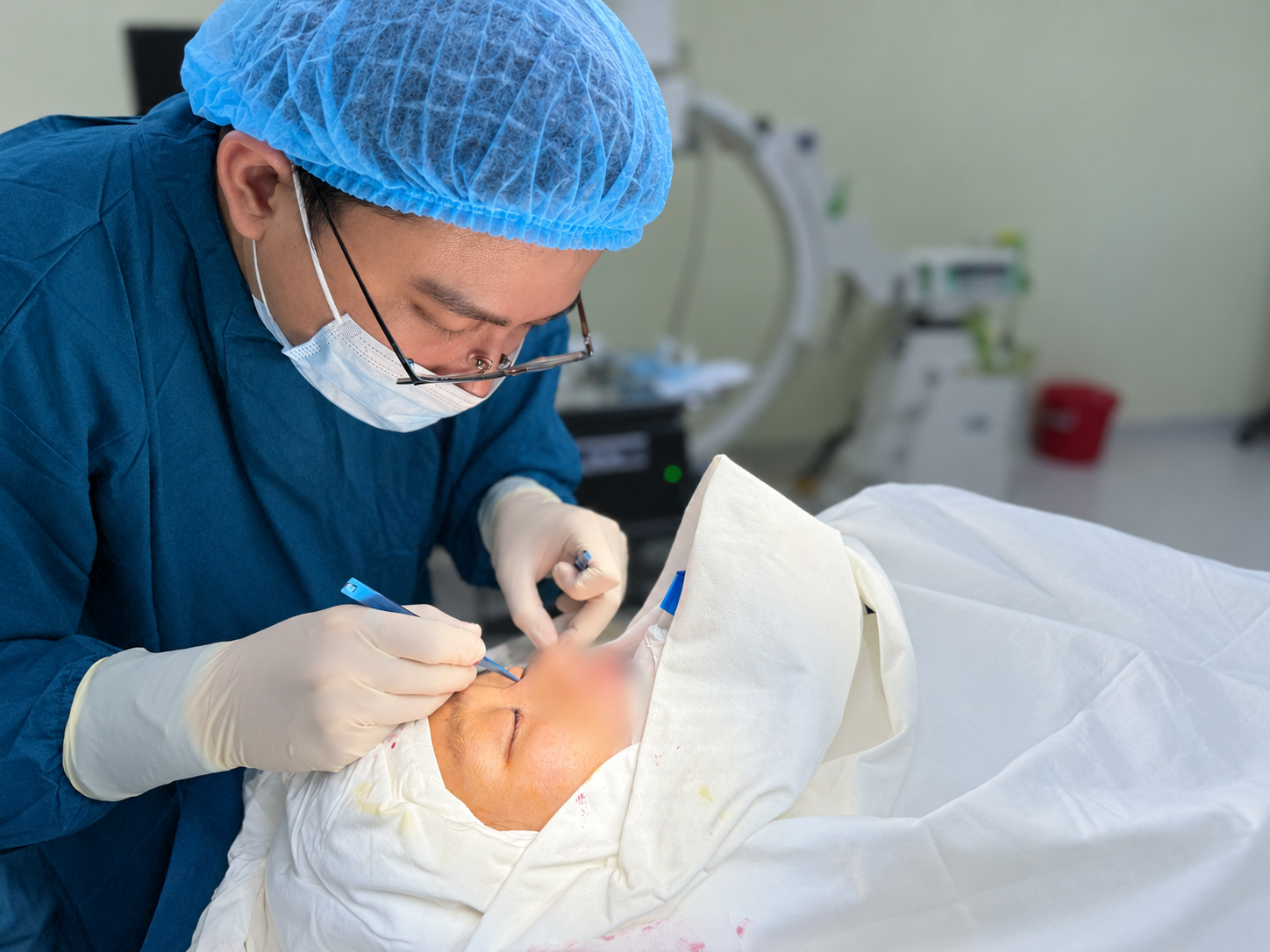
Qua thăm khám, ThS.BSNT. Trần Công Danh – bác sĩ chuyên khoa Mắt nhận thấy tình trạng của bé không chỉ liên quan đến hướng của lông mi mà còn do nếp da ở góc mắt trong đã tác động đến hàng lông mi.
Hiểu một cách đơn giản, ở góc trong mắt của bé có một nếp da làm phần bờ mi bị kéo vào trong. Vì vậy, một số sợi lông mi thay vì hướng ra ngoài như bình thường lại chạm vào bề mặt mắt. Sự cọ xát lặp đi lặp lại khiến bé luôn có cảm giác như có vật gì trong mắt, dẫn đến cộm xốn và chảy nước mắt thường xuyên. Tình trạng này được gọi là nếp quạt góc mắt kèm quặm mi góc trong.
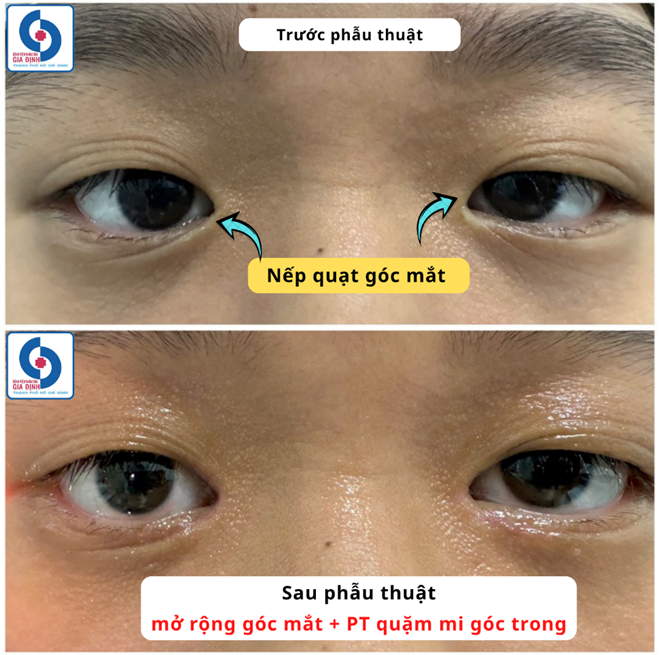
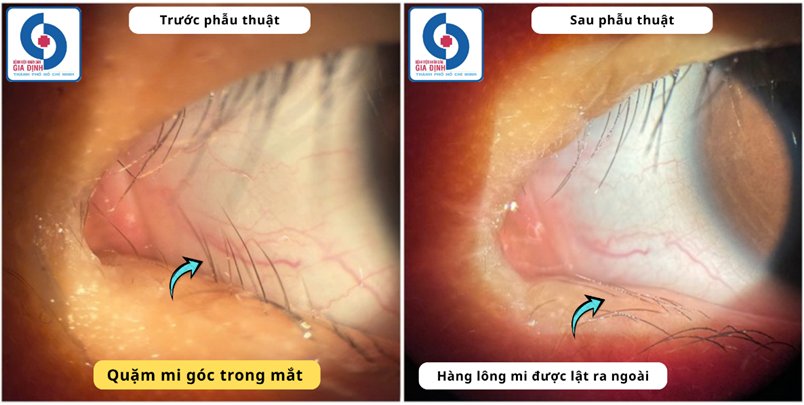
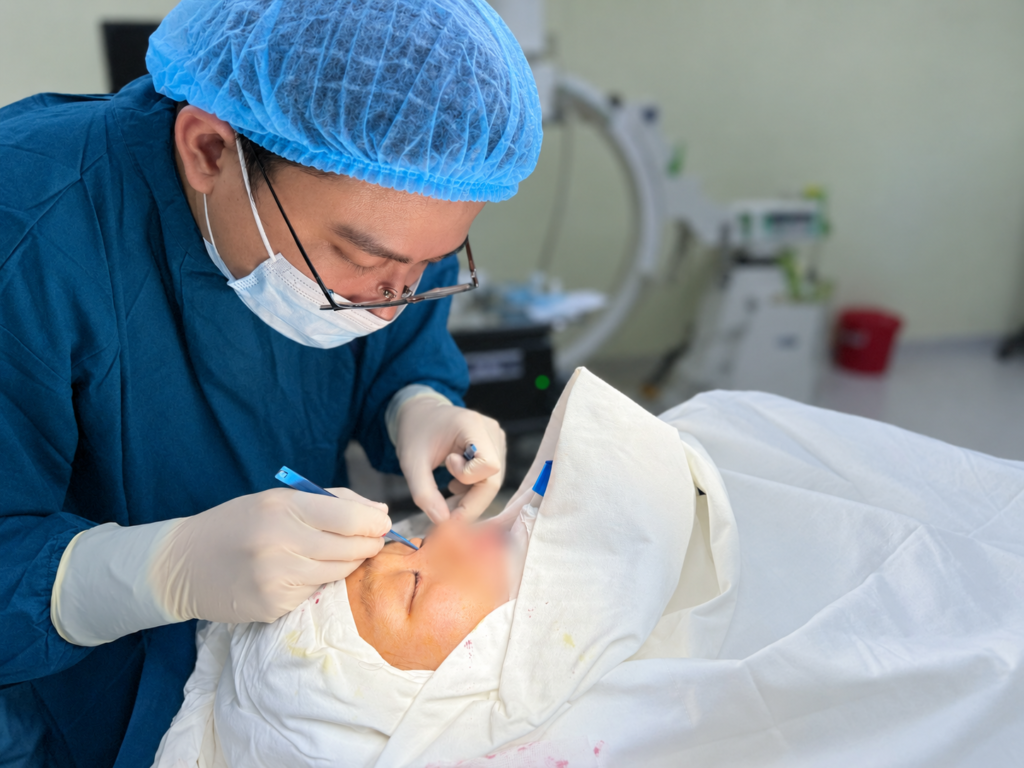
Sau khi đánh giá cẩn thận, bác sĩ đã trao đổi với gia đình và lựa chọn phương pháp phẫu thuật mở rộng góc mắt trong kết hợp chỉnh quặm mi, giúp điều chỉnh vùng góc mắt và đưa những sợi mi trở về đúng hướng, không còn tiếp tục cọ vào mắt bé.
Sau phẫu thuật 10 ngày, bé cùng gia đình trở lại bệnh viện để tái khám và cắt chỉ. Qua thăm khám, vùng góc mắt và hàng mi được cải thiện, những sợi mi đã hướng ra ngoài và không còn cọ vào bề mặt mắt. Nhờ đó, cảm giác cộm xốn giảm rõ rệt, tình trạng chảy nước mắt thường xuyên cũng không còn.
KHI NÀO CHA MẸ NÊN ĐƯA TRẺ ĐI KHÁM?
Không phải trẻ nào có nếp da ở góc mắt hoặc quặm mi cũng cần phẫu thuật. Tuy nhiên, cha mẹ nên đưa trẻ đến khám chuyên khoa Mắt khi nhận thấy:
- Cộm xốn hoặc chảy nước mắt;
- Đỏ mắt, dụi mắt hay nheo mắt;
- Có lông mi hướng vào trong và chạm vào mắt.
- Từng điều trị quặm mi nhưng cảm giác khó chịu xuất hiện trở lại.
Tại Chuyên khoa Mắt – Bệnh viện Nhân dân Gia Định, Cơ sở Sài Gòn, người bệnh được thăm khám, đánh giá kỹ tình trạng mắt và tư vấn phương pháp điều trị phù hợp. Tùy mức độ bệnh, bác sĩ sẽ lựa chọn từ theo dõi, điều trị nội khoa đến các kỹ thuật can thiệp chuyên sâu. Với những trường hợp có chỉ định và đủ điều kiện, phẫu thuật có thể được sắp xếp thuận tiện, giúp người bệnh chủ động và rút ngắn thời gian điều trị.
——————
EYE IRRITATION AND TEARING IN A 12-YEAR-OLD GIRL: MEDIAL EPICANTHOPLASTY AND ENTROPION CORRECTION AT NHAN DAN GIA DINH HOSPITAL – SAI GON CAMPUS
Even a single loose eyelash falling into the eye can cause considerable discomfort. For B.L., a 12-year-old girl, however, the sensation of something constantly irritating her eyes occurred day after day and was accompanied by persistent tearing, causing significant discomfort. As the symptoms continued, her family brought her to the Ophthalmology Clinic at Nhan Dan Gia Dinh hospital – Sai Gon campus for examination and treatment.
According to her family, B.L. had previously undergone surgery for congenital entropion when she was younger. Therefore, when the uncomfortable symptoms reappeared, her family became concerned and wondered: Why did she still experience eye irritation and persistent tearing? Had the previous condition returned, or was there another underlying cause that had not yet been identified?
During the ophthalmic examination, Dr. Tran Cong Danh, ophthalmologist, found that the condition was not only related to the direction of the eyelashes but also to a skin fold at the inner corner of the eye that was affecting the eyelid margin and eyelashes.
In simple terms, a skin fold at the inner corner of the eye was pulling part of the eyelid margin inward. As a result, some eyelashes, instead of pointing outward normally, were coming into contact with the ocular surface. This repeated friction caused a persistent foreign-body sensation, resulting in eye irritation and frequent tearing. This condition is known as an epicanthal fold associated with medial entropion.
After careful evaluation, the physician discussed the condition and treatment options with the family. Medial epicanthoplasty combined with entropion correction was selected to correct the inner corner of the eye and redirect the eyelashes outward, preventing them from continuing to rub against the ocular surface.
Ten days after surgery, B.L. returned to the hospital with her family for a follow-up examination and suture removal. The inner corner of the eye and eyelid margin showed good improvement. The eyelashes were directed outward and no longer rubbed against the ocular surface. As a result, the foreign-body sensation and irritation were significantly reduced, and the persistent tearing had resolved.
WHEN SHOULD PARENTS TAKE THEIR CHILD TO SEE AN OPHTHALMOLOGIST?
Not every child with an epicanthal fold or entropion requires surgery. However, parents should consider taking their child for an ophthalmic examination if they notice one or more of the following signs:
- Persistent eye irritation, foreign-body sensation, or tearing;
- Eye redness, frequent eye rubbing, or squinting;
- Eyelashes turning inward and touching the ocular surface;
- Previous treatment for entropion followed by recurrence of uncomfortable symptoms.
At the Ophthalmology Clinic – Nhan Dan Gia Dinh hospital – Sai Gon campus, patients receive comprehensive eye examinations, detailed assessments, and individualized treatment recommendations. Depending on the severity of the condition, physicians may recommend observation, medical management, or more specialized interventions.
For patients with appropriate medical indications and who meet the necessary clinical criteria, surgery can be conveniently scheduled, helping streamline the treatment process and reduce overall treatment time.



 Tổng Lượt Truy Cập: 1006356
 Số Người Đang Online : 37